Jens & Uwe Kruger 2010 Workshop

Jens Kruger on the 5-String Banjo

Jens Kruger on the 5-String Banjo

April 9-10, 2010


Jens & Uwe Kruger’s


Banjo & Guitar Workshop

For months now, I have been working out the details for Jens & Uwe Kruger’s Southeast Florida Banjo & Guitar Workshop.  In April 2009, I first approached Jens Kruger about the possibility of establishing what I hope will become an annual event for banjo and guitar (and in the future mandolin) community living or visiting Southeast Florida.  For those who are not familiar with Jens Kruger, I encourage you to read my article that was published in the August 2009 issue of Banjo Newsletter or you can access the article at the Library section of www.fretmentor.com.

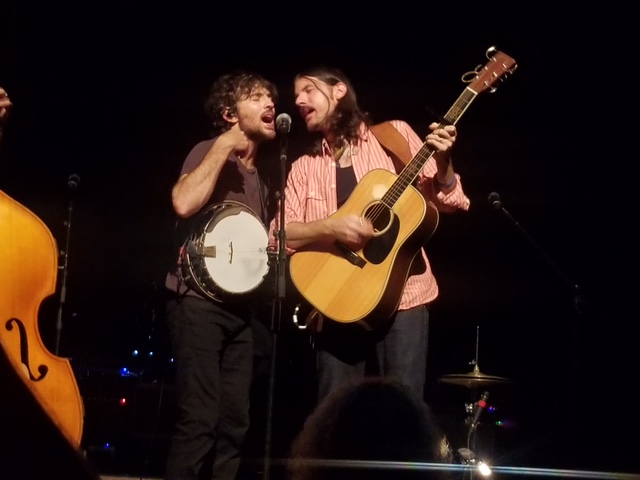
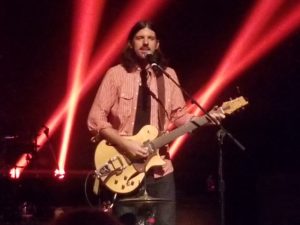
Guitar Player - Uwe Kruger

Guitar Player & Singer - Uwe Kruger

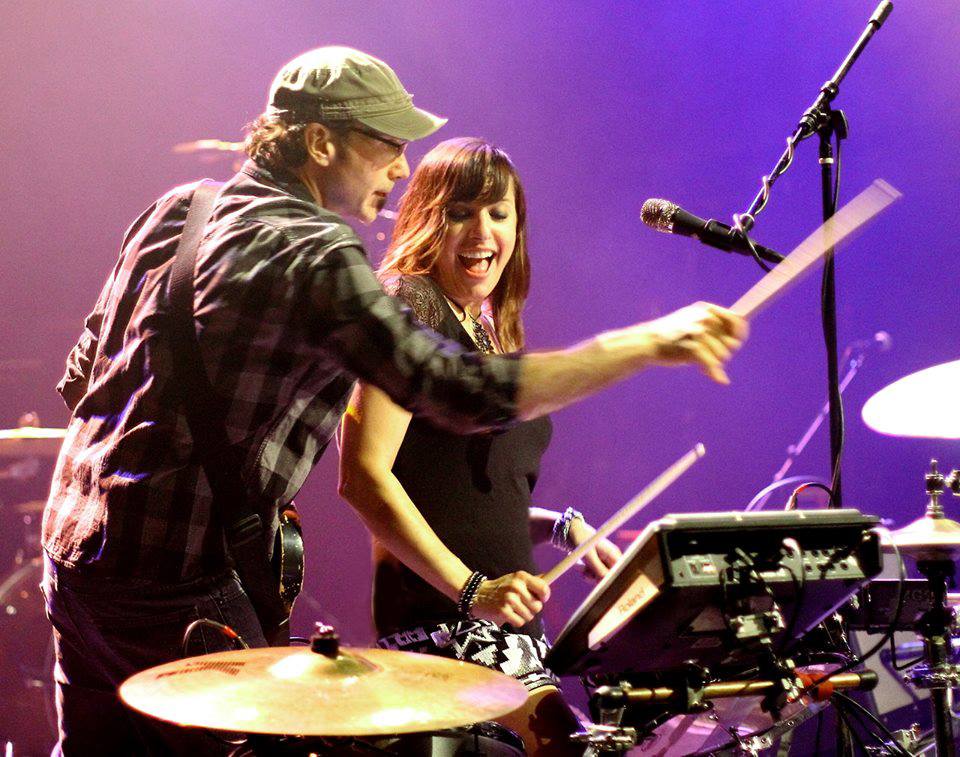
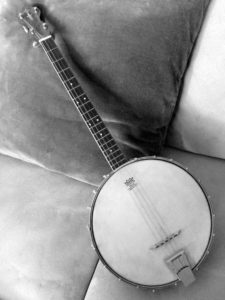
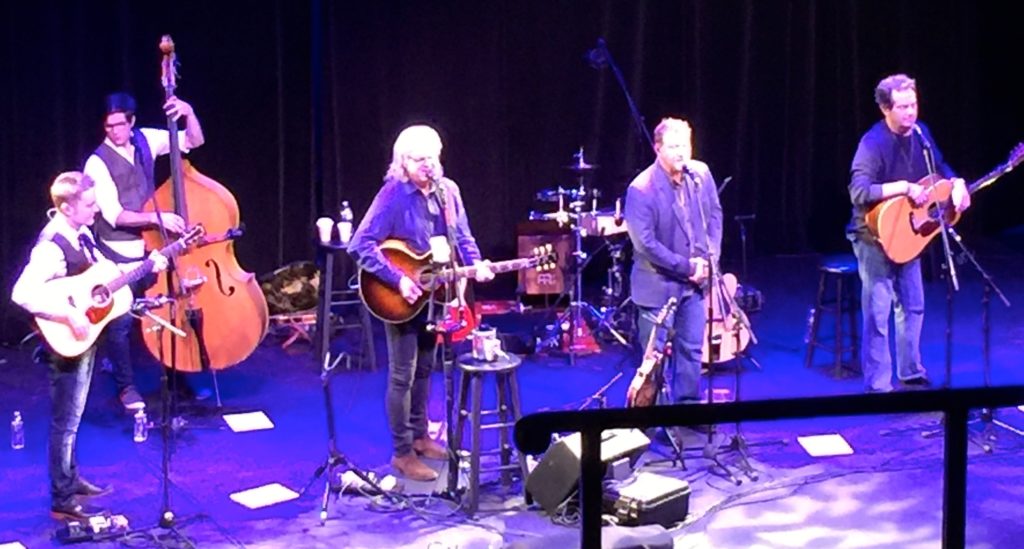
Jens Kruger is not only a unique and talented banjo player but I find him to be quite personable.  Uwe Kruger, is an excellent guitar player and as the lead singer, establishes the foundation for the Kruger Brother’s warm and soothing sound. In fact, the entire band (which includes Uwe Kruger on guitar and Joel Landsberg on bass) is a special group of musicians.  They engage their audience with a personal approach to their music, which includes not only bluegrass music but European flavored chamber style music.  Once you go to see them in person, you will discover what a wonderful musical blend they have and will grow to admire their talent.

The Jens & Uwe Kruger Banjo & Guitar Workshop, held in Lake Worth, Florida will be a wonderful opportunity for banjo and guitar students to not only learn beginning through advanced technique on their instruments, but for each student to get up close and personal with two of the finest European born musicians to visit Southeast Florida.  If the workshop was not enough, each attendee will also have the opportunity to win some prizes, which include two banjos donated from First Quality Musical Supplies and the Deering Banjo Company.  Others sponsors, including Intellitouch Tuners, Banjo Newsletter,  Homespun Music Instruction, Bluegrass Unlimited Magazine and Acoustic Guitar Magazine, will be giving away prizes as well.

In addition to the weekend workshop on Friday and Saturday, workshop attendees will also be able to purchase some of the best tickets in a block that I have reserved for the Kruger’s Brother’s Sunday concert in Palm Beach.  If you are a Kruger Brother’s fan, you will not want to miss this opportunity and if you do not know much about them, you will soon become a fan and follower after attending this special event.  I look forward to seeing you all in Lake Worth Florida on April 9th and 10th, 2010.

Feel free to contact me at david (Insert @ symbol) fretmentor.com for registration details.

Digg!

The Right Way to Build a Chord Vocabulary

Knowledge of Theory Helps to Build Chords

Knowledge of Theory Helps to Build Chords

When an aspiring musician buys their first banjo, guitar or mandolin, they also usually are talked into buying a pictionary chord book.  Such a book, lists chord after chord, in charts that are in alphabetically order.  Without knowing any better, each time the student  comes across an unfamiliar chord in a song, he or she scans the book in an attempt to find the correct chord position on the fingerboard. To learn chords in this manner can be equated to memorizing phone numbers in a phone book.

As a teacher, I advise all my students that the best way to learn chord structure and build a “chord vocabulary” is to begin with basic music theory.  This theoretical knowledge begins with understanding the major scale.  The major scale (Do, Re, Mi, Fa, Sol, La, Ti, Do) is the backbone of music.  It establishes a foundation for a musician to play and understand chords, building melody lines and playing songs.

There are many types of chords and whether or not you use them will depend on the genre of music you play.   Unfortunately, some students of the banjo, guitar and mandolin only scrape the surface when studying chord structure.  Maybe they learn their open major chords and a handful of minors.  Open chords are partially fretted but use open strings as well.  Closed forms take the open chords further by moving them up the neck by barring the open strings.  Sadly, some students never learn their moveable chord forms up the neck on their instrument.

Finger Strength & Coordination Helps to Build Chords

Finger Strength & Coordination Helps to Build Chords

Studying chords is a process in itself.  You can start with a basic understanding that the major chord is built on the first, third and fifth note of the chord’s major scale.  The minor is achieve by modifying the major chord with a flatted third. Other chord forms are derived from these chord types and are termed extended or altered chords. Most importantly, the process begins with a basic understanding of the major scale and what notes make up a major chord.

In the future, instead of referring to that pictionary book of chord charts each time you come across a new chord in a song, turn your attention towards basic music theory.  Your efforts will be rewarded and you will come out ahead in the long term.

Time is on a Musician’s Side

Use Your Practice Time Wisely

Use Your Practice Time Wisely

While most students of the banjo, guitar or mandolin recognize that learning an instrument will take both time and patience, there are a few who feel that they should progress further in a shorter period of time.  A student will say to me, “I have been playing for a year already and I’m just not getting better”.  To this student, a year seems like a long time.  Quite the contrary, a year of studying and practicing music (including taking music lessons), is an insignificant period of time.  In fact, a serious student can expect to play for many years before he or she becomes more comfortable with playing an instrument. It may take six or seven years before you actually feel you are reaching a level where playing songs is appealing to both you and an audience.

Practice Pays Dividends

When a students exhibits their frustration in this manner, a teacher such as myself, has to ask a few questions.  First, how much time are you practicing?  Second, are you practicing every day?  If you step away from your instrument for a week, it will show in your playing.  Similarly, if you practice a song for a period of time and then let that song sit for weeks, you will quickly forget the song.  You see, practicing a banjo, guitar, mandolin or any other instrument requires dedication and commitment.  Otherwise, the limited time you invest in practicing your instrument will not yield the results that you may expect.  I am sure you have heard the saying “You get what you pay for.” In musical terms, the saying is “You get out of your instrument what you put into it.”

So the next time you sit down to practice your banjo, guitar or mandolin, use your time wisely.  Do the hard work.  Play some scales. Practice a strumming technique. Play some rolls or work on your tremolo or vamping technique.  Take a small break but make sure you return and practice some more.  Practice a minimum of an hour a day and if you can help it, don’t go a day without practicing.  Remember ………

Time is on a musician’s side.

Digital Recorders - A Useful Tool?

Recording 101

Recording 101

Should you throw away that cassette recorder? What is a hand held digital recorder? How does a portable recorder differ from a computer’s music digital interface?  These are some of the questions you may have when you start exploring recording your own music.

Thanks to technology, a student of the banjo, guitar or mandolin has options for recording sound files.  To start, a student can record themselves using a digital mp3 recorder.  The files can be then transferred to the computer and then burned to CD.  Surprisingly, the quality of the recording is quite good.  I once recorded my entire band using a simple digital recorder and one condensor microphone. The condensor microphone (which is powered by batteries connected to the recorder) allows for a better recording option than using a computer’s built in microphone.  While some of the band members were skeptical that the recording would be useful for a demo, they were later surprised at the results.  We at least had a draft demo of some songs recorded at home from one of our many practice sessions..

mp3 digital recorder

mp3 digital recorder

When I started preparing instructional materials, I recorded sound files using a single hand held digitial recorder.  The quality of the recordings were surprisingly good.  Yet there are limitations.  You can only recording a single track.  However, for someone starting out, recording a single track, such as your rhythm or your lead, is a start in the right direction.  A student who records and listens to themselves play, will benefit from hearing what others hear.

Stay tuned for more in a series of blogs about technology in recording and the various equipment involved.  Next time, I will address the usb musical interface which takes home recording closer to studio recording sound.

What Time is it?

“I played this much better on my own at home than in front of you.”

Music Theory 101

Music Theory 101

I often hear this comment from my music students.  It is their perception that they are playing well behind closed doors.  In actuality, the beginning banjo, guitar and mandolin student needs to address the timing of the piece when they practice. Otherwise, they may know which notes to play but their melody line will fall ahead or behind a group when performing with others.

The Time Signature (2/4, 3/4, 4/4 ect), which is denoted after the Clef sign at the beginning of a piece of music, indicates what time the musician will be playing.  The top number refers to the number of beats that exist in a measure.  The bottom number, indicates what type of note (quarter, eighth, ect) receives one beat.  For example, 3/8 time means that there are three beats per measure with the eighth note receiving one beat. On the other hand, 4/4 time, indicates that there are four beats per measure and the quarter note receives one beat.

Are you having trouble with keeping a good rhythm?  Do you practicing scales slowly and evenly with a goal to gradually build speed with a consistent beat? Have you practiced with a metronome or do you play along with sound files to build your confidence with timing issues? Let us know how you plan on practicing to improve your timing and rhythm.

Just remember - don’t be caught saying it sounded better at home.

My Dog Ate My Music!

Whining About Lack of Practice Time?

Are Your Excuses For Not Practicing Justified?

As a teacher of the banjo, guitar and mandolin, I often hear the various reasons why someone is not able to practice.

After earning my BA degree, I first attended law school and then moved on to graduate school. My career soon required me to move eight times to four states. Yet, in all these moves and disruptions, I never took a break from my music. I am not claiming to be a poster child for practicing. However, I find it amusing when a child or an adult tells me they are too busy to practice.

When I teach my guitar class for children, 20 youngsters appear on the first day of class, ready and anxious to play. That number sometimes dwindles to a smaller number as the term goes on.  A few of the children soon realize that learning a musical instrument requires dedication and effort. When I ask the children to raise their hands if they practiced every day the first week, not many raise their hands. Yet, when I ask them if they watched TV or play video games daily, many of them salute in unison.

Adults are not much different. In the past, I had adults tell me that unlike me, music is not the way they make a living. Music is not their sole interest. They have a family or they have other obligations. My response to such comments is that if I had ever thought that way when I started playing music, I would not have reached the level in which I play today. I never considered practicing music in a manner which would generate income or as a means of making a living. I never let my job, family and friends, hobbies or other interests, or the various moves I made from state to state,  interfere with my determination to practice and learn music. I simply practiced because I enjoyed the music.

I guess my rationale is that if you have the time to take a shower (which I hope you do) then you have the fifteen or twenty minutes a day to play the banjo, guitar or mandolin.  If you can watch an hour or more of the latest reality shows on TV, then you can practice your instrument an hour a day. It is all a matter of how you prioritize your time.  In my case, music just became a passion and a high priority.  It was never intended to be a career.

Digg!

Frets & Math

Music Theory 101

Music Theory 101

In one of my guitar classes, I had a student mentioned that she never thought she’d have to learn algebra to learn music.  Algebra you ask? No .. we weren’t learning algebra.  We may have been applying a little geometry to our musical education.  We definitely were learning how to count (at least from one to twelve). We counted backwards and forwards.  Maybe we added or subtracted notes. Yet, algebra is not something that we were using.

You see, there is a certain amount of math involved in music theory. A student of the banjo, guitar and mandolin must understand numbers to truly have an understanding of the fingerboard. Not all musicians understand music theory and yet, they are great players.  However, the student who manages to understand the numerical relationships of notes, will have an easier time creating and playing melody lines and lead riffs.

Frets & Numbers

Every Fingerboard Has Numerical Relationships

When comparing the banjo, guitar and mandolin, you will find certain numerical similarities, as well as some differences.  The guitar, for instance, is tuned to fourths. This means that the note adjacent to another note you play on the next string is the forth note of the root note’s scale.  Confused?  Well, it is simpler than it sounds. The mandolin is tuned to fifths. The banjo?  It is a little more complex regarding scale structure. I do not mean to confuse you further but on the banjo and in one instance, the guitar, the pattern of notes shift.  It will be the shifts that alter a simple box relationship and make playing a scale a little more difficult.

Geometry & Music?

What about Geometry? Boxes, circles, angles and rectangles also exist on the banjo, guitar and mandolin.  If you study the fingerboard of each of these instruments, you will discover relationships between many of the notes. It is these geometrical relationships that open up the fingerboard for a student.

So when you go to see your music instructor, if they do not know the relationships of the notes on the fingerboard, then they probably can’t help to clearly explain the instrument to you. A good instructor will not only know how to play the instrument but will be able to provide a fingerboard map to a student, which will guide you towards better lead play.

Digg!

Good Bye Les

Les Paul 1915-2009

Les Paul 1915-2009

Today the Music World Lost

a Legend & Pioneer


Earlier today, August 13, 2009, I received news that my friend Les Paul died at age 94. When I say my friend, I  should clarify that unfortunately, I did not have the chance to meet Les in my lifetime. However, every time I went to the music store to play a Gibson electric guitar or watch many famous guitar greats who played a Gibson Les Paul Custom guitar, I knew that Les Paul signified quality and greatness. This man touched many people and through the solid body electric guitar, many performers were in touch with Les.

Les Paul Was An Innovator

Les Paul Was An Innovator

Ironically, I just stopped at my local library yesterday to pick up a book called “The Early Years of the Les Paul Legacy”, written by Robb Lawrence. This is an excellent resource with a pictorial and written history of the man and a message from Les himself. I selected this book because of my interest in the history of musical instruments and the pioneers who contributed to the development of these instruments.  Les Paul not only played guitar (with his wife Mary Ford as his vocalist), but he is responsible for many of the innovations in the design of the solid body electric guitar and was a genius in the recording industry.

There are some notable facts that Mr. Lawrence documents in his book about Les Paul.  In late 1936, Les was one of the first guitarists to use a Spanish electric guitar in an orchestra on the radio.  In 1940, Les began to utilize inexpensive Epiphone Zephyr model guitars, where he experimented with the pickup configurations.  His experimentation led to incorporating a Rickenbacher vibrola (which was patented in 1929) and using them exclusively. Doc Kauffman, the inventor of the vibrola, would later team up with Leo Fender for the first steel guitars and amplifiers. Meanwhile, Les Paul continued tinkering with Epiphones to reinforce them with metal plate enhancements.

Les Paul - A Guitar Legend

Les Paul - A Guitar Legend & American Icon

You can also read about Les and his accomplishments in a book entitled “Gibson Guitar - 100 years of an American Icon”. The author, Walter Carter, explains that in 1951, Les would partner with Gibson to introduce the Gibson Les Paul Model solid body electric guitar, which featured  P-90 pickups and a cylindrical bridge tailpiece. Modifications were later made to include the stop tailpiece, tune-o-matic bridge, and coveted humbucking pickups. Decades later, as early as 1993, these guitars were recreated, and today are desirable reissues of the early original Gibson solid bodies. As early as 1941, Les Paul’s retrofitted 20 lb instrument with a Gibson neck, referred to as “the Log”, is considered the first solid body electric guitar.
Les Paul Was a Recording Pioneer

Les Paul Was a Recording Pioneer

While there are various books on this great legend, one notable program worth watching is a program PBS aired on Less Paul entitled “Chasing Sound”.  In this documentary, Les is noted as more than a musician or performer, he was recognized for his experimentation with sound and recordings.  His multi-track recordings, which he completed in a garage at his home in California, revolutionized the recording industry.  “Overdubbing” and “reverb” are terms associated with the late great Les Paul; a recording genius who experimented with the recording of sound, in a similar manner as he experimented with the guitar itself.

I think its safe to say that almost every young guitar player has a dream to one day own and play a Les Paul guitar. Everyone from BB King, Keith Richards, Buddy Holly, Eric Clapton, Jeff Beck, Peter Townshend and more have not only played the Les Paul Custom guitar but credit Les Paul with his  major contributions to making the recording industry what it is today.

No .. I never met Les Paul, nor did I ever see him play live.  Yet, as a fellow guitar player, I can’t help but consider Les a friend.

May Les Paul Rest In Peace.

Banjo Rap

Does The Banjo Get A “Bad Rap” At Times?

Hog on the Banjo - NYPL (Used with Permission)

Hog on the Banjo - NYPL (Used with Permission)

Is the banjo and instrument that sometimes receives undeserved or critical judgment from  non-musical observers? At times, I notice references made on television or in public, to the banjo or banjo playing.  These comments may include references to Dueling Banjos and mountain men.   Once I heard a late night show address the banjo in a comical manner, as though it is as they called it; a “hillbilly instrument”. Some, for effect, like to hum or whistle the first couple of notes of Dueling Banjos as though the banjo is not sophisticated.  Maybe some well recognized Scruggs tunes, such as the Beverly Hillbillies theme song or Foggy Mountain Breakdown (the theme song from Bonnie & Clyde), may have inadvertently stereo-typed the banjo with a biased or opinionated image of the rural countryside.

What the public doesn’t often hear are jazz and orchestral arrangements that are performed by some of today’s best banjo players.  Have you heard of Alison Brown or Jens Kruger?  If you haven’t, you are missing two of today’s most diversified banjo players, who aren’t afraid to extend the instrument’s reach to jazz, classical or chamber music.  Listen to Bela Fleck play his electric banjo with his band the Flecktones, or how his five sting banjo sounds in an album called “Perpetual Motion”, and you will be amazed at the unlimited possibilities this instrument has to offer.

As a performer of the guitar, mandolin and the banjo, I find it interesting that when you go to a local music store in many metropolitan areas, a customer is lucky to find one or two cheap and overpriced banjos, at the end of a long row of guitars.  The music store owner fails to recognize the instrument’s potential or promote the instrument to the public.  Sure, the guitar is one of the most popular instruments to play but even my first banjo class had fifteen registered participants with a wait list of ten. Yet, there were hardly any banjos to be found for sale at local music stores.

An Audience Is Captivated By The Banjo's Sound

An Audience is Captivated By the Sound of the Banjo

Ironically, when playing music in public, the banjo has a presence that is captivating.  I have played guitar for almost as many years as the banjo. I could sit with another guitar player and strum some of our best tunes without much recognition beyond a polite applause. However, when I put the guitar down and start playing the banjo, the audience comes alive and they are mesmerized. Children, as well as adults, are fascinated with the sound the instrument makes.

So what do you think?  Does the banjo get an unfair rap?

Music Therapy

Each and every one of us experience stress in our daily life activities. Whether you have lost a love one, lost a job, are having financial difficulties, broke up with you significant other, or are facing other challenges in life; music can be your salvation. I am not trying to preach to you. I am just simply stating what I believe is a fact.

Playing Music Is Therapeutic

Playing Music Is Therapeutic

Music therapy, as a profession, is studied at a number of colleges throughout the country. According to the American Music Therapy Association, professional musical therapists help to promote wellness, alleviate pain, manage stress, enhance memory, and promote physical rehabilitation.  In fact, various studies have also found that music education can fight Alzheimer’s disease and assist others with brain injuries.

Talk to a professional musician and they might tell you that their music is like water or air to them. They might add that the thought of not having music in their life is unimaginable. I can attest that in addition to my family, music has been my therapy. To play or perform music is a means of healing the soul. When I play music, I am not overwhelmed thinking about daily problems. I am relaxed. I am in my zone, so to speak.

Now some of you may say that when you play music, you are anxious or uptight. You get frustrated with the way you play or perform. Yet, if you practice hard, you will reap the rewards that music has to offer. Your sense of accomplishment will be therapeutic. Not everyone has the benefit of utilizing this creative part of their personality though. After all, there are many who listen to music and far less who actually study and play an instrument on a daily basis.

I sense that other musicians feel this way. Their creativity is promoted through music, like an artist’s creativity is revealed in a painting. Others who are not musicians may seek outlets that are different than an artist or the banjo, mandolin or guitar player. For me, though, a life without music would seem empty. Its a lifestyle and a passion of mine. It is part of my body, mind and soul.

←Older