Banjo Rap

Does The Banjo Get A “Bad Rap” At Times?

Hog on the Banjo - NYPL (Used with Permission)

Hog on the Banjo - NYPL (Used with Permission)

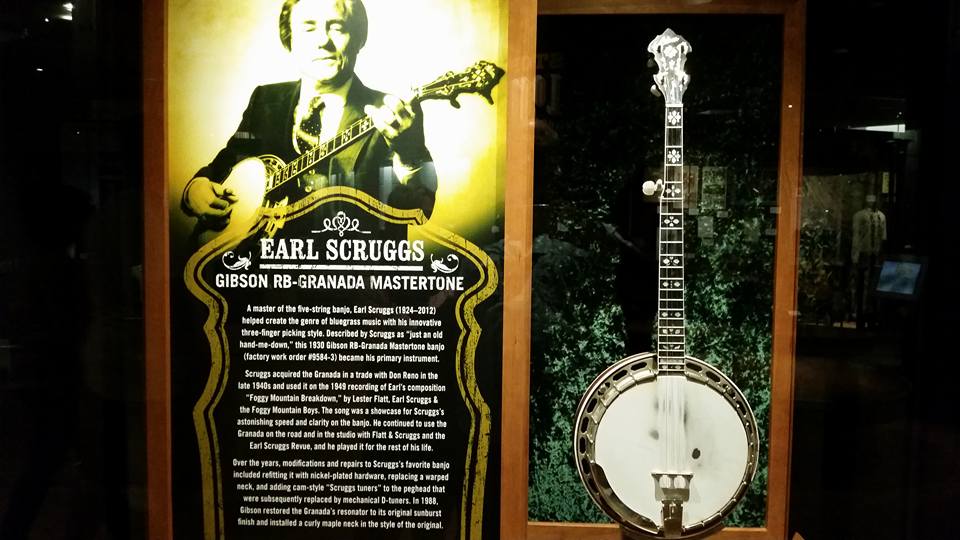
Is the banjo and instrument that sometimes receives undeserved or critical judgment from  non-musical observers? At times, I notice references made on television or in public, to the banjo or banjo playing.  These comments may include references to Dueling Banjos and mountain men.   Once I heard a late night show address the banjo in a comical manner, as though it is as they called it; a “hillbilly instrument”. Some, for effect, like to hum or whistle the first couple of notes of Dueling Banjos as though the banjo is not sophisticated.  Maybe some well recognized Scruggs tunes, such as the Beverly Hillbillies theme song or Foggy Mountain Breakdown (the theme song from Bonnie & Clyde), may have inadvertently stereo-typed the banjo with a biased or opinionated image of the rural countryside.

What the public doesn’t often hear are jazz and orchestral arrangements that are performed by some of today’s best banjo players.  Have you heard of Alison Brown or Jens Kruger?  If you haven’t, you are missing two of today’s most diversified banjo players, who aren’t afraid to extend the instrument’s reach to jazz, classical or chamber music.  Listen to Bela Fleck play his electric banjo with his band the Flecktones, or how his five sting banjo sounds in an album called “Perpetual Motion”, and you will be amazed at the unlimited possibilities this instrument has to offer.

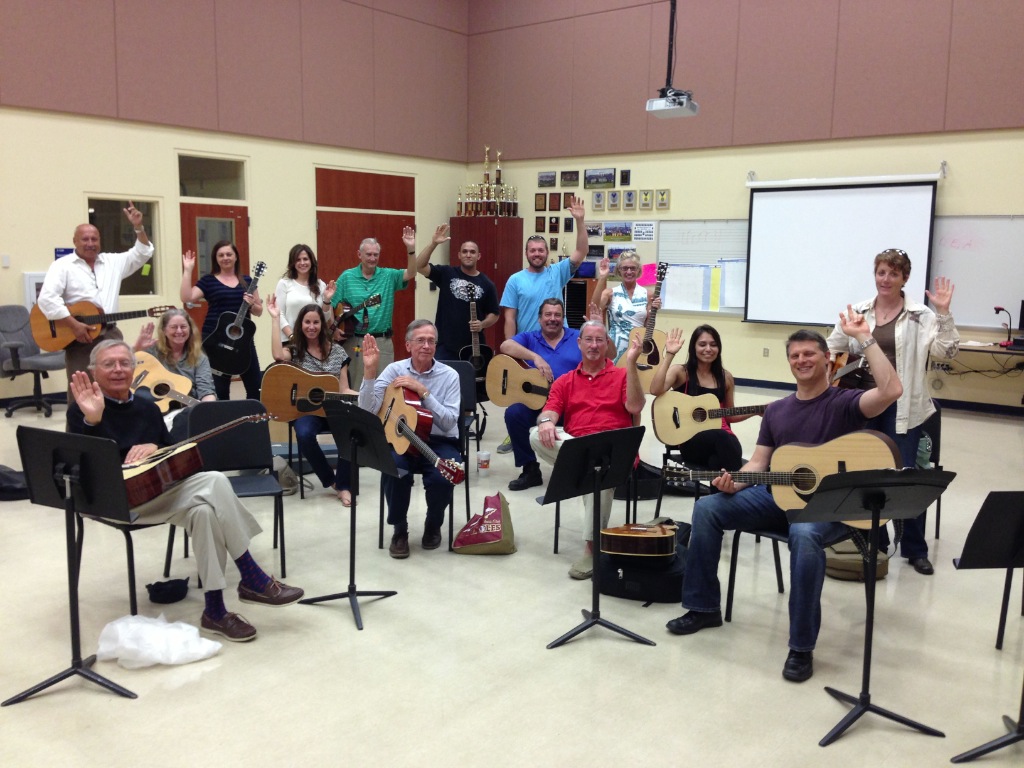
As a performer of the guitar, mandolin and the banjo, I find it interesting that when you go to a local music store in many metropolitan areas, a customer is lucky to find one or two cheap and overpriced banjos, at the end of a long row of guitars.  The music store owner fails to recognize the instrument’s potential or promote the instrument to the public.  Sure, the guitar is one of the most popular instruments to play but even my first banjo class had fifteen registered participants with a wait list of ten. Yet, there were hardly any banjos to be found for sale at local music stores.

An Audience Is Captivated By The Banjo's Sound

An Audience is Captivated By the Sound of the Banjo

Ironically, when playing music in public, the banjo has a presence that is captivating.  I have played guitar for almost as many years as the banjo. I could sit with another guitar player and strum some of our best tunes without much recognition beyond a polite applause. However, when I put the guitar down and start playing the banjo, the audience comes alive and they are mesmerized. Children, as well as adults, are fascinated with the sound the instrument makes.

So what do you think?  Does the banjo get an unfair rap?

Music Therapy

Each and every one of us experience stress in our daily life activities. Whether you have lost a love one, lost a job, are having financial difficulties, broke up with you significant other, or are facing other challenges in life; music can be your salvation. I am not trying to preach to you. I am just simply stating what I believe is a fact.

Playing Music Is Therapeutic

Playing Music Is Therapeutic

Music therapy, as a profession, is studied at a number of colleges throughout the country. According to the American Music Therapy Association, professional musical therapists help to promote wellness, alleviate pain, manage stress, enhance memory, and promote physical rehabilitation.  In fact, various studies have also found that music education can fight Alzheimer’s disease and assist others with brain injuries.

Talk to a professional musician and they might tell you that their music is like water or air to them. They might add that the thought of not having music in their life is unimaginable. I can attest that in addition to my family, music has been my therapy. To play or perform music is a means of healing the soul. When I play music, I am not overwhelmed thinking about daily problems. I am relaxed. I am in my zone, so to speak.

Now some of you may say that when you play music, you are anxious or uptight. You get frustrated with the way you play or perform. Yet, if you practice hard, you will reap the rewards that music has to offer. Your sense of accomplishment will be therapeutic. Not everyone has the benefit of utilizing this creative part of their personality though. After all, there are many who listen to music and far less who actually study and play an instrument on a daily basis.

I sense that other musicians feel this way. Their creativity is promoted through music, like an artist’s creativity is revealed in a painting. Others who are not musicians may seek outlets that are different than an artist or the banjo, mandolin or guitar player. For me, though, a life without music would seem empty. Its a lifestyle and a passion of mine. It is part of my body, mind and soul.

Is Practicing Music Frustrating?

In 1969, I got this toy for Christmas called “Frustration Ball”.  The toy consisted of a clear globe with eight cups and one ball.  The object was to toss the ball from one cup to another in order, without missing a cup.  For instance, you started with the ball in Cup 1 and turn the ball enough for the ball to be captured in Cup 2.  You continued this routine until you achieved getting the ball in all eight cups without missing one cup.  If you missed a cup, you started all over again. Thus, the term “Frustration Ball”.

Can Practicing Be Frustrating?

Can Practicing Be Frustrating?

How does this relate to banjo, mandolin and guitar?

Pay Attention to Each & Every Note You Play

Pay Attention to Each & Every Note You Play

The idea is best exemplified when practicing a scale, riff, or song.  When you practice, pay careful attention to the details. Pick one note at a time and listen to what you are playing.  Practice slowly and don’t double hit your notes.  Most importantly, if you make a mistake, start over and try again.  Do not play over your mistakes without correcting them first. With persistence and dedication, the results might surprise you.

We have all experienced the frustration of practicing and struggling to get a certain song perfected.  Imagine, as a 9-year old, how I felt when I finally reached all eight cups in a row without making a mistake. Its the same feeling I get now when playing a song accurately.

Do You Know Your Musical ABCs?

Music Theory 101

Music Theory 101

When I start teaching a new banjo, guitar or mandolin class, I first ask my students whether or not they know their alphabet. These students, many whom are adults, look at me with a bit of disdain, as though I just asked a question that is far beneath their level of intelligence. After all, we all learned our alphabet in kindergarten, didn’t we?. So they answer, “Yes .. we know our alphabet”. Be careful, I say. This is a trick question.

A to G

Say your alphabet real fast from “A” to “G”. Now say it backwards real fast from “G” to “A”. Going forwards was easy wasn’t it? Did you hesitate on the way backwards though? If you’re honest, you will say that you hesitated if not simply stopped between letters. You see, the majority of us never learned our alphabet going backwards.

Sharps (#) and Flats (b)

Now the good news. In music you only need to know the alphabet from “A” through “G”. There is no “H” note or beyond in music. Seems rather easy. The “not so good” news is that we throw in these notes called sharps and flats between most of the musical alphabet but not between every note. Why make it easy on you right? For the beginning music student, the musical alphabet just got a little complicated. The sharps and flats are known as enharmonics because they provide two letter names for one single note. The notes A through G are called natural notes and can best be remembered as all the white keys on the piano.

We don’t have an equal number of sharps (#) and flats (b) as we do natural notes (A through G). Think of your fretted instrument as though you were playing a piano.  It is important that you remember which notes do not have sharps or flats between them.  The answer is that “B” to “C’ and “E” to “F” do not have sharps and flats between them. Those are the same two sets of white keys that are next to one another on the piano.  Let’s not forget though, that a fretted instrument doesn’t have keys but uses fret.

So there is your musical alphabet from A to G.  Throw in the sharp and flats and you have twelve notes in all.

A Musician’s Need For Speed

When you are practicing or playing your instrument, are you patient enough to play slowly?  In order to learn a piece of music correctly, you need to develop your timing and rhythm and many students are guilty of playing too fast without keeping a steady rhythm.

Do you have a need for speed?

Do you have a need for speed?

To exemplify, a banjo player learns many fast songs.  Some of those fast traditional tunes are what attracted them to the instrument in the first place.  Similarly, a blues guitarist in the style of Stevie Ray Vaughn may receive some gratification in playing many fast rifts up the neck of the guitar fingerboard.  Then there is the mandolin player, who sometimes forgets that there is more to the mandolin than playing a bunch of eighth notes quickly.  The student’s desire may be driven by speed.  Yet there are many benefits to learning (at least at first) how to play your instrument slowly .

As a teacher, I often tell my students that I should charge them an additional $5.00 for each time I ask them to slow down during a lesson.  Sometimes my pleas seem to fall on deaf ears.  When I say “slowly” I mean slower than what you would normally even feel comfortable doing.  I would equate “slow” in musical terms as walking toe to heel, in baby steps down the street.

If you learn a song slowly and concentrate on your timing and rhythm, you will quickly discover that your speed will develop naturally.  It is much better to be a perfectionist with your sound while practicing slowly, then to later become a fast but sloppy banjo, guitar or mandolin player down the road. Let’s also not forget some of the wonderful slow tunes that are worth learning and adding to your musical repertoire.

Are you guilty of having a need for speed?  Let us know. In the meantime, be patient and your speed will develop over time.

To Record or Not to Record

Recording 101

Recording 101

Musicians of all types can benefit from recording their music. The beginning banjo, guitar or mandolin student may cringe at the idea of listening to themselves on tape. It is sort of like listening to your own voice, which I think the majority of us can agree, is not the most enjoyable experience.

What are some of the benefits of recording your music and your practice sessions? First, when you play music (especially when performing on stage), it is very difficult to ascertain what exactly the audience hears. You may be playing too soft or too loud. Maybe your rhythm is not precise or maybe you speed up your lead play in the middle of a song. The benefits of hearing what you previously played can be many. Through recordings, you can hear what you play and work towards improving your skills.

Should beginners voluntarily or involuntarily be recorded?  Some teachers use recordings of recitals as a learning tool.  This debate to record or not record, however, can be a source of aggravation with a classroom of students. For instance, one of my classes had an experience where they were recorded by another student without their knowledge.  Some of these beginning students felt uncomfortable after being recorded, especially when I thought it would be a good idea to have each student subsequently critique their particular song.  So, even teachers can learn from the experiences of their own students.

While I see a value in recording audio and even video of your own music,  the classroom session may not be the best place to do it.  After all, the goal of the teacher should be to encourage and not to discourage beginners; some of who have a difficult time adjusting to performing in public. While it may be beneficial, not all students want to to be exposed to being recorded at the early stage of their development as a musician. Yet, I would never disregard the benefit of using recordings to learn.

As an experienced musician and teacher, I place a value on recording lessons to benefit my students.

Recording Can Be An Effective Tool

Recording Can Be An Effective Tool

This is the first of a series of blogs I plan on running, regarding the process of recording music.  In the future, I will be discussing a variety of issues such as portable recording, private and group audio and video production, instructional recordings, technology and equipment, and the process of building a home recording studio.  As each issue is separately addressed, I encourage readers to post their experiences with recording music. Remember, many readers can learn from your successes as well as your failures.

A Music Student’s Plateau

 Successful Musicians Can Learn To Reach Their Potential

A Music Student Can Learn To Reach Their Potential

I have been studying music for a year now and I feel like I am not getting anywhere.

I think I have hit a plateau with my mandolin.

How do I get out of this rut with my guitar playing?

How can I take my banjo playing to the next level?

When will I ever figure this instrument out?


If you have taught music for a long enough time as I have, you will eventually hear some of the above comments and questions from students or class participants. As an instructor, I have learned not to take these comments personally.

My advice to the music student is usually the same: A plateau or rut is actually a normal occurrence. For those who seek advice and carefully commit themselves to a long-term education in music, the monotony of playing at what is perceived to be at the same level, is not insurmountable. However, for music students who do not recognize this potential pitfall and fail to seek advice, this stagnant period can lead to a loss of interest in playing an instrument all together.

So what is the secret to reaching the next level when practicing and playing your musical instrument?  First, you need to have a commitment for the long-term.  If music was easy, everyone could do it.  The majority of musicians are not born with a hidden talent.  They work hard every day to achieve greatness. Think of the hours spent by a virtuoso in an orchestra who practices regularly to earn the right to perform with his or her colleagues. Practice makes perfect as they say.  There are many ways to develop your skills to succeed.

How Can I Progress Beyond The Plateau?

First, keep in open mind when studying music.  Do you play various genres of music or do you limit your practice to one type; such as blues, pop, rock or country?  Experiment with your style.  Learning jazz and classical music, for instance, will open up the finger board and develop a greater understanding of how to improvise, while playing lead on your instrument.

Learn how to play various scales up and down the neck of the instrument.  While this may not seem exciting, learning scales is fundamental to learning your instrument and the music your play on it.

Train your ear by playing simple melody lines on a different part of the fingerboard.

Develop your chord vocabulary.  If you are unsure of how to accomplish this, begin with a basic understanding of music theory and what notes make up particular chords.

Do you have a qualified instructor?  If not, much is to be gained by learning from someone who has the experience in playing and teaching music.  A good instructor can teach you more in a shorter period of time than you can ever learn on your own (with or without books and DVDs). You made an investment in the instrument. It would be penny-wise and pound-foolish to short-change yourself by limiting your instructional tools and the methodology used to play that instrument. A good instructor is a good investment.

Performing With Others Is Invaluable

Performing With Others Is Invaluable

When in doubt, if you have been playing awhile; buy a new or different instrument.  If you play acoustic guitar, buy an electric guitar.  If you have an entry level banjo or mandolin, buy a nicer quality instrument which may be easier to play.  To play a new instrument for the first time is like opening up a present on your birthday  It adds some excitement to your daily routine. Another alternative is to try to add a second instrument to your collection and learn how to play it as well. Of course, only do this if you are serious about music.

Play music with other musicians.  You will develop your timing, rhythm and lead technique this way.  Playing alone will not provide you with the opportunity to build these skills.  Take advantage of working with others on a common goal.  You will make great friends this way and most importantly, improve as a musician.

These are only a few ideas to help you get over the plateau.  There are many other suggestions and tips that I will explore in later articles. Until then, keep practicing and don’t let the plateau control you.

Motor City Bluegrass?

Motor City Bluegrass Ticket

I remember that first festival as though it was yesterday. Of all places, it was held outside of the Motor City.  That is right, just outside of Detroit, Michigan.  The home of Motown and automobile production, was taking a back seat to bluegrass for a brief moment.  For a mere $9, on this particular day (May 30, 1984), one of the truly great bluegrass festivals was available to all attendees.

John Hartford Performing On Stage In 1984

John Hartford Performing On Stage In 1984

Have you ever been at, or should I say, “participated” in a bluegrass festival?  It is not just a concert.  It is more like a revival. People from all over gather to listen to various performers on stage.  In addition, many of the attendees travel with their banjos, guitars and mandolins in hand, to see how they will fare with the great parking lot pickers in the area.  You just join a small group of musicians and start performing with others.  There are usually various groups comprised of players with different skill levels. If at any time, you feel uncomfortable with a particular group, you can move to the next or start a group on your own.  There are no rules.

When I wasn’t picking, I made sure I attended the performances of some of the true legendary bluegrass performers. On this particular day, the headliners who were sharing center stage included Bill Monroe and the Bluegrass Boys, John Hartford, and the Doug Dillard Band.  If you haven’t heard of some of these performers, then you need to take a short course in the history of bluegrass music.

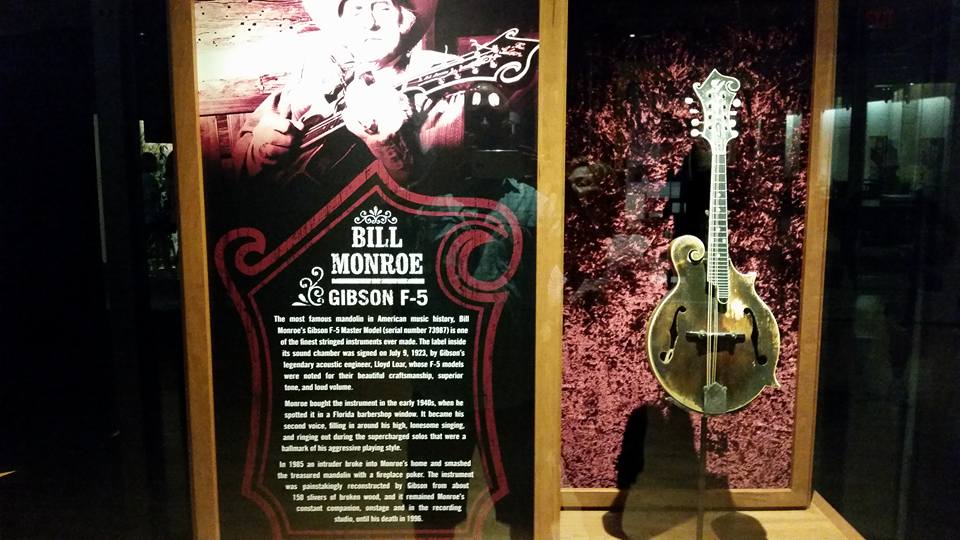
Through this history you will discover that the great Bill Monroe was known as the Father of Bluegrass.  He was one of the greatest mandolin players ever. As for Doug Dillard, some of you may recall that he made regular appearances on the Andy Griffith Show.  He performed on the show as a member of the fictional bluegrass band called the Darlings. For those who missed seeing John Hartford, you would have seen one of the most under-rated musicians of our day.  Hartford, who’s song “Gentle On My Mind” was popularized by singer/songwriter Glen Campbell, was a special and uniquely talented individual. He played either banjo, fiddle, and guitar, while he danced on stage on his own amplified plywood platform.

Detroit may not be known for its bluegrass but on this particular Memorial Day, it is a festival that I could hardly forget.  Sadly, John Hartford and Bill Monroe are no longer with us.  However, as the cliche goes, their music lives on.

Doug Dillard Performing on Stage in 1984

Doug Dillard at the Motor City Bluegrass Festival

For those of you who have never attended a bluegrass festival, you just don’t know what you are missing.  Those regular festival goers will understand what I mean.

Bill Monroe Performing On Stage in 1984

Bill Monroe On Stage With The Bluegrass Boys

If any of you wish to share experiences of your favorite bluegrass festivals, I believe others would enjoy reading your comments.  Let us know where the festival was located and who are some of the great legends that you had the chance to see or meet. Do you regularly attend festivals?  Do you remember your first bluegrass festival?

Author’s Note:  In 1984, I took these photos of Bill Monroe, John Hartford and Doug Dillard, at the Motor City Bluegrass Festival.  They provide wonderful memories of my first bluegrass festival.

Mandolins From A to F

Today when you go to a music store specializing in stringed instruments, you will see a variety mandolins by different instrument makers.  They may come in different wood finishes and colors, yet the styles have remained the same for many decades.

F-5 Master Model Mandolin

F-5 Master Model Mandolin

The two modern standards include the A Style and the F Style mandolins. These two styles can be credited to Orville Gibson, who as early as 1898, came up with different styles of mandolins from their predecessors.  It is quite amazing, actually, that Mr. Gibson had the foresight to create styles for mandolins that are still in demand over 100 years later.

A Style Mandolin

A Style Mandolin

Patent number 598,245, dated February 1898, diagrams the A style mandolin.  Today, the A Style mandolin is quite popular and is the most affordable of the two styles.  My original mandolin was an A style mandolin.  It wasn’t a Gibson but it was a nice mandolin for a beginner to get started on.  This mandolin sadly is hanging on my wall after accidentally falling from a shelf that at the time, I felt was a safe place for it to be stored.  The lesson learned, a little too late, was to protect your instruments in a hard shell case whenever possible.

Today, I play an F-5L Fern Gibson mandolin.  It is a beautiful instrument with a wonderful tone.  The early vintage F Style mandolins are highly collectible and quite valuable.  You will often see many professional mandolin players performing with the F Style mandolins.

Mandolin players have a common love of their instrument.  If you are proud of playing your mandolin, I am certain that others would have an interest in hearing your comments and sharing their own stories of their favorite mandolin.  Did you buy a mandolin recently?  What style did you choose? Do you dream of one day having one of those vintage mandolins in your collection. Let us know!

Greatest Musicians – Do Polls Only Go So Far?

banjopollOver the course of a year or so, I added polls to my website www.fretmentor.com, for readers to vote on who they believe is the best banjo, guitar or mandolin player of all-time.  Of course, some of these polls had to be categorized according to a particular genre of music (jazz, blues, bluegrass) and style (fingerstyle, flatpicking).  I also added a category, entitled “Other”, because despite all the thought that went into the process, I may have left someone significant out of each poll.

Sure enough, I noticed that banjoist Jens Kruger, was inadvertently left out of the banjo poll.  That was quite an oversight on my part, since I have to consider Jens Kruger one of the best banjo players in the world today. This is especially true after seeing his latest performance (see an earlier blog  “Kruger Brothers Come to Palm Beach”).  Sorry Jens.

mandopollThe problem with polls is that a participant (voter) does not have an opportunity to clarify why he or she voted a specific way.  If you are a mandolin player, for instance, you have to consider Bill Monroe one of the greatest of all-time.  However, maybe today you have three other mandolin players who are at the top of your list.  In any event, that shouldn’t diminish your prior admiration of Mr. Monroe.

guitarpoll2Another problem with polls is that a voter may forget about the great contributors and innovators of the past.  Many of you know who Eric Clapton or BB King are today but fewer may be familiar with Robert Johnson or Muddy Waters, the pioneers who may have influenced such modern artists. So people tend to vote for the performer for which they are most familiar.  This is one reason why my website continues to expand on a historical overview of some of these great performers.  Music has a history that is not only relevant but essential to developing current and future performers of these instruments.

guitar1pollSo, here is an opportunity for you to not only vote but to also express who your favorite banjo, guitar and mandolin players are and why?  I encourage you to add your comments to this blog.  You can reference the history and polls listed at www.fretmentor.com. and vote in these polls if you haven’t already done so.  Most importantly, give us your comments and help to engage others to share their opinions and thoughts as well .

I have my list of favorite banjo, guitar and mandolin players.

Who are yours and why?